
Home › Cybersecurity & GRC Career Guides › Responsible AI Skills
Responsible AI Skills
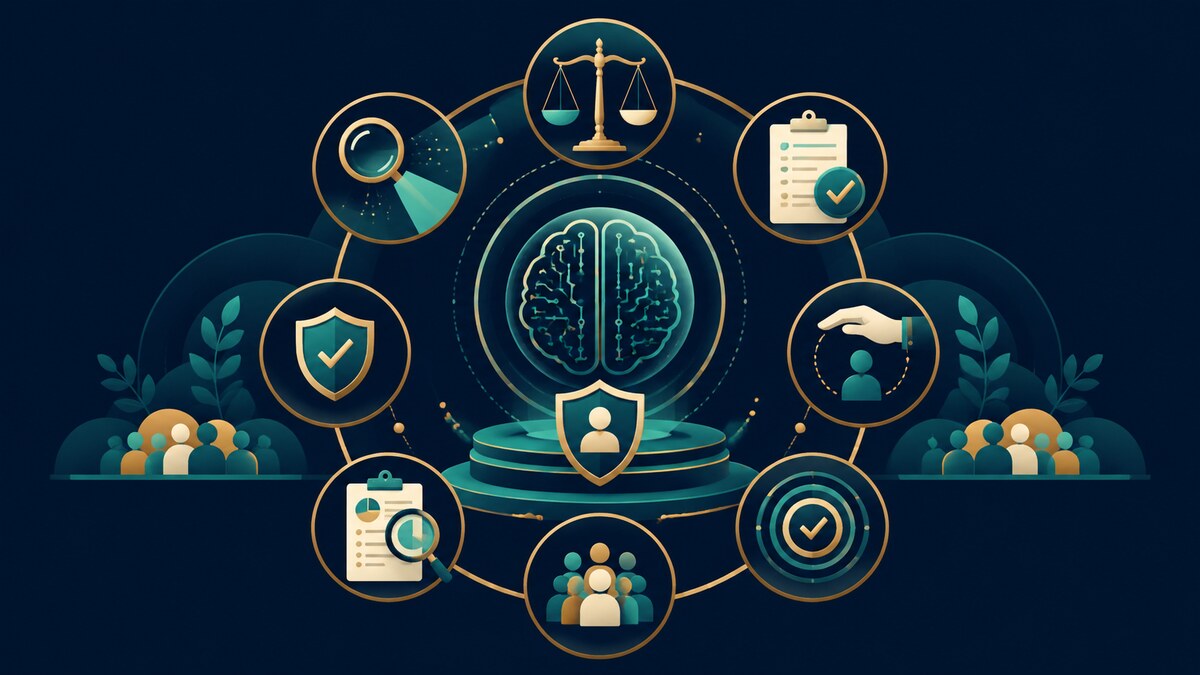
Almost every large organization has published AI principles. Fairness, transparency, accountability, human oversight, some version of that list. Very few can tell you what changed as a result. Responsible AI as a job is the work of closing that gap, and it is mostly translation rather than philosophy.
Turning a principle into a requirement
"We are committed to fairness" is unenforceable. It has no owner, no threshold and no test.
The translation runs like this. Which fairness definition, since the common ones are mathematically incompatible and you cannot satisfy demographic parity and equalized odds at once except in trivial cases. Measured across which groups, using what data, given that you frequently do not hold the attributes you would need to measure by. What difference is acceptable, stated as a number. What happens when it is exceeded, and who decides.
Answering those five turns a value into a control. Being able to walk an interviewer through that translation for one principle is worth more than being able to name every framework in the field.
The incompatibility nobody wants to discuss
The principles conflict with each other, and pretending otherwise is why programs stall.
Accuracy and explainability trade off. A model constrained to be interpretable often performs worse, and someone has to decide whether the loss is acceptable. Privacy and fairness trade off, because auditing for bias requires holding the demographic data privacy work tries to minimize. Human oversight and scale trade off, since meaningful review does not survive contact with a hundred thousand decisions a day.
The job is not resolving these. It is surfacing them, presenting real options, and getting a named decision.
Where it actually attaches
Responsible AI fails when it exists as a separate review nobody schedules. It works when it attaches to gates that already exist: procurement, design review, change management, model deployment approval.
The most effective people in this role spend surprisingly little time writing principles and a lot of time getting three questions added to a form somebody was already filling in.
The standards that make it concrete
ISO/IEC 42001 is the management system standard and it is certifiable, which matters because certification creates a schedule and an auditor. The NIST AI Risk Management Framework organizes the work into Govern, Map, Measure and Manage, and its Govern function is closest to this discipline. The OECD AI Principles underpin a good deal of the policy language now appearing in regulation.
For anything touching the EU, the AI Act converts several of these principles into legal obligations with dates attached, which changes the internal conversation considerably.
Who is good at this
People who can hold a technical conversation and an ethical one without collapsing either into the other. That combination shows up in philosophy graduates who learned the technology, engineers who got interested in consequences, privacy professionals, and policy people who can read a model card.
What it does not reward is enthusiasm without specifics, which is the most common failure mode in candidates for these roles.
Where to go next
- Browse the jobs that use these skills
- Follow a career roadmap into the role you want
- Hiring for this? Start from a job description template
- Free certification study games, 592 practice questions
Frequently Asked Questions
What are responsible AI skills?
The ability to convert AI principles into requirements someone can act on and audit, surface the conflicts between principles, and attach the resulting checks to decision gates that already exist rather than creating a review nobody schedules.
How do you make a principle like fairness operational?
Choose a fairness definition, since the common ones are mathematically incompatible. Decide which groups to measure across and with what data. State the acceptable difference as a number. Define what happens when it is exceeded, and name who decides.
Why do responsible AI principles conflict?
Accuracy and explainability trade off, since interpretable models often perform worse. Privacy and fairness trade off, because auditing for bias requires the demographic data privacy work minimizes. Human oversight and scale trade off, since meaningful review does not survive a hundred thousand decisions a day.
What does a responsible AI practitioner actually do?
Less principle writing than people expect. Mostly attaching a small number of questions to gates that already exist, such as procurement, design review, change management and deployment approval, so the work happens without a separate process.
Which standards support responsible AI?
ISO/IEC 42001 as a certifiable management system standard, the NIST AI Risk Management Framework for structure, and the OECD AI Principles as the source of much regulatory language. In the EU, the AI Act converts several principles into dated legal obligations.
Why does certification matter?
Because it creates a schedule and an external auditor. A certifiable standard such as ISO/IEC 42001 turns intentions into something with a deadline and a person who checks, which voluntary principles do not.
What background suits responsible AI work?
People who can hold a technical and an ethical conversation without collapsing one into the other. Philosophy graduates who learned the technology, engineers interested in consequences, privacy professionals, and policy people who can read a model card all do well.
What is the most common mistake in these roles?
Enthusiasm without specifics. Candidates who can discuss principles but cannot say how they would measure one, what threshold they would set, or who would decide when it is breached, do not progress.
What jobs require responsible AI skills?
Responsible AI lead, AI ethics officer, AI governance manager, AI policy analyst, and product roles at organizations deploying AI in consequential domains.
More in this series
- 9 Essential Data Governance Skills for the AI Era
- 10 Internal Audit Skills for Modern Assurance Careers
- 12 Transferable GRC Skills You May Already Have
- Technical vs. Nontechnical GRC Skills: What Employers Actually Need
- AI Governance Skills Employers Actually Hire For
- GRC Analyst Skills: What the Job Actually Requires
- Compliance Analyst Skills
- Risk Assessment Skills
- Controls Testing Skills
- Policy Writing Skills
- Regulatory Change Management Skills
- Third-Party Risk Skills
- Model Risk Management Skills
- AI Impact Assessment Skills
- AI Auditing Skills
- AI Evaluation and Testing Skills for Governance Careers
- Data Lineage Skills
- Data Quality Skills
- Privacy Engineering Skills
- AI Security Skills
- AI Incident Response Skills
- Governance Program Management Skills
- Stakeholder Communication Skills
- Executive Risk Reporting Skills
- Evidence Documentation Skills
- Control Mapping Skills
- Framework Crosswalking Skills
- Vendor Due Diligence Skills
- GRC Tools and Automation Skills
- How to Build the 9 Data Governance Skills: A 12-Month Career Plan
- Founder of ExecSearches and GRC Careers
- Executive search across corporate, higher education, financial services, and nonprofit sectors
- Focus on AI governance and GRC hiring
- More than a decade in risk advisory and internal audit in financial services
- Led SOX and regulatory audits for Citi, Goldman Sachs, Morgan Stanley, and McKesson
- Public Accounting Certification, Cornell University