
Home › Cybersecurity & GRC Career Guides › Compliance Analyst Skills
Compliance Analyst Skills
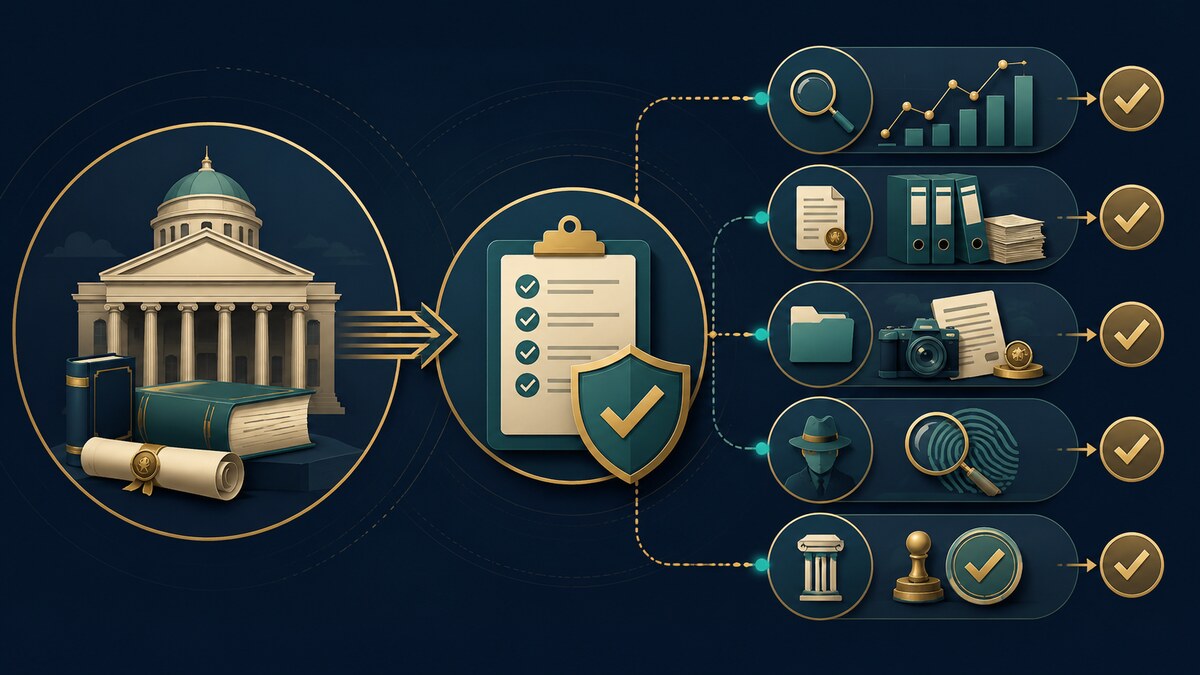
Compliance analyst is one of the widest job titles in the field. The same words cover someone reviewing transaction alerts at a bank, someone running SOC 2 evidence at a software company, and someone handling billing rules at a hospital. The daily work barely overlaps. What does overlap is a set of habits, and those are what transfer when you change sector.
The four habits that travel
Reading a rule and extracting the obligation. Regulation is written to be precise, not readable. The skill is pulling out who must do what, by when, and what proves it, then writing that in a sentence an operations manager can act on.
Testing whether something actually happened. Not whether a policy exists. Whether the thing the policy requires occurred, throughout the period, with evidence. This is the habit most new analysts lack and the one that shows fastest.
Getting information out of people who are busy. Much of the job is asking someone with their own deadlines for something that helps only you. Analysts who are organized, specific and reasonable about timing get answers. Analysts who send reminders in bulk get ignored.
Writing so a stranger can follow it. Your file will be read by an auditor, a regulator or a successor who has none of your context.
Sector decides the specifics
In financial services, expect AML and sanctions work, transaction monitoring, know your customer files, and a supervisory examination culture. In healthcare, HIPAA privacy and security, billing integrity, and the Office of Inspector General's seven elements of an effective compliance program, which is the backbone of most healthcare compliance job descriptions. In technology, SOC 2 and ISO 27001 evidence, customer security questionnaires, and increasingly AI governance obligations.
These do not transfer cleanly. Someone moving from bank compliance to healthcare compliance keeps the habits and relearns the content, and it is worth being honest about that in an interview rather than implying the knowledge is portable.
What separates the middle from the top
Two things, and neither is knowledge of regulation.
The first is judgment about materiality. Junior analysts escalate everything or nothing. Experienced ones can tell the difference between a documentation slip and a genuine control failure, and can defend the call.
The second is being useful to the business rather than only to the auditor. The analyst who says no is a cost. The analyst who says "not that way, but here is a way that works" is the one who gets promoted, and it is the trait hiring managers describe when they say they want someone "commercial".
Credentials, honestly
CAMS carries real weight in financial crime roles. CCEP is well recognized in healthcare and corporate compliance. CISA opens IT audit and technology compliance doors. For AI-adjacent work, the IAPP's AIGP is the most established credential so far.
They help get past screening. None of them substitutes for being able to walk through a control you tested and an exception you found.
If you are trying to get in
Compliance is one of the more accessible routes into GRC, because the entry requirement is care and clarity rather than a technical stack. Operations, customer service, paralegal, audit and healthcare administration backgrounds all convert well. What you need to demonstrate is that you can take an obligation, turn it into a check, and write down honestly what you found.
Where to go next
- Browse the jobs that use these skills
- Follow a career roadmap into the role you want
- Hiring for this? Start from a job description template
- Free certification study games, 592 practice questions
Frequently Asked Questions
What does a compliance analyst do?
It varies enormously by sector. In banking, transaction monitoring, sanctions screening and know your customer files. In healthcare, HIPAA, billing integrity and the OIG compliance program elements. In technology, SOC 2 and ISO 27001 evidence and customer security questionnaires. The common thread is turning obligations into checks and evidencing the result.
What skills do compliance analysts need?
Four that transfer across every sector: extracting the actual obligation from a rule, testing whether something happened rather than whether a policy exists, getting information out of busy people, and writing so a stranger can follow the file.
Do compliance skills transfer between industries?
The habits transfer well. The subject matter does not. Someone moving from banking to healthcare compliance keeps the method and relearns the content, and saying so plainly in an interview is more credible than implying the knowledge carries over.
What certifications help compliance analysts?
CAMS for financial crime, CCEP for healthcare and corporate compliance, CISA for IT audit and technology compliance, and the IAPP AIGP for AI governance work. They help with screening but do not substitute for being able to discuss a control you tested.
How do you get into compliance without experience?
It is one of the more accessible routes into GRC because the core requirement is care and clarity rather than a technical stack. Operations, customer service, paralegal, audit and healthcare administration backgrounds all convert well.
What separates a senior compliance analyst from a junior one?
Judgment about materiality, and usefulness to the business. Junior analysts escalate everything or nothing. Senior ones distinguish a documentation slip from a genuine control failure and can defend the call, and they offer a workable alternative rather than only a refusal.
What are the OIG seven elements?
The seven elements of an effective compliance program used by the US Office of Inspector General as the framework for healthcare compliance: written standards, a compliance officer and committee, training, communication lines, monitoring and auditing, enforcement and discipline, and prompt response to detected problems.
Is compliance analyst a good entry point to GRC?
Yes, and it is one of the most common. The role builds the testing, evidence and communication habits that risk, audit, security compliance and AI governance roles all draw on.
How is AI changing the compliance analyst role?
Two ways. Analysts are being asked to assess AI systems their organization uses, under ISO/IEC 42001 or the EU AI Act, and tooling is automating routine evidence collection, which shifts the human work toward judgment and exception handling.
More in this series
- 9 Essential Data Governance Skills for the AI Era
- 10 Internal Audit Skills for Modern Assurance Careers
- 12 Transferable GRC Skills You May Already Have
- Technical vs. Nontechnical GRC Skills: What Employers Actually Need
- AI Governance Skills Employers Actually Hire For
- GRC Analyst Skills: What the Job Actually Requires
- Risk Assessment Skills
- Controls Testing Skills
- Policy Writing Skills
- Regulatory Change Management Skills
- Third-Party Risk Skills
- Model Risk Management Skills
- AI Impact Assessment Skills
- AI Auditing Skills
- AI Evaluation and Testing Skills for Governance Careers
- Data Lineage Skills
- Data Quality Skills
- Privacy Engineering Skills
- AI Security Skills
- AI Incident Response Skills
- Governance Program Management Skills
- Stakeholder Communication Skills
- Executive Risk Reporting Skills
- Evidence Documentation Skills
- Control Mapping Skills
- Framework Crosswalking Skills
- Vendor Due Diligence Skills
- Responsible AI Skills
- GRC Tools and Automation Skills
- How to Build the 9 Data Governance Skills: A 12-Month Career Plan
- Founder of ExecSearches and GRC Careers
- Executive search across corporate, higher education, financial services, and nonprofit sectors
- Focus on AI governance and GRC hiring
- More than a decade in risk advisory and internal audit in financial services
- Led SOX and regulatory audits for Citi, Goldman Sachs, Morgan Stanley, and McKesson
- Public Accounting Certification, Cornell University