
Home › Cybersecurity & GRC Career Guides › Evidence Documentation Skills
Evidence Documentation Skills
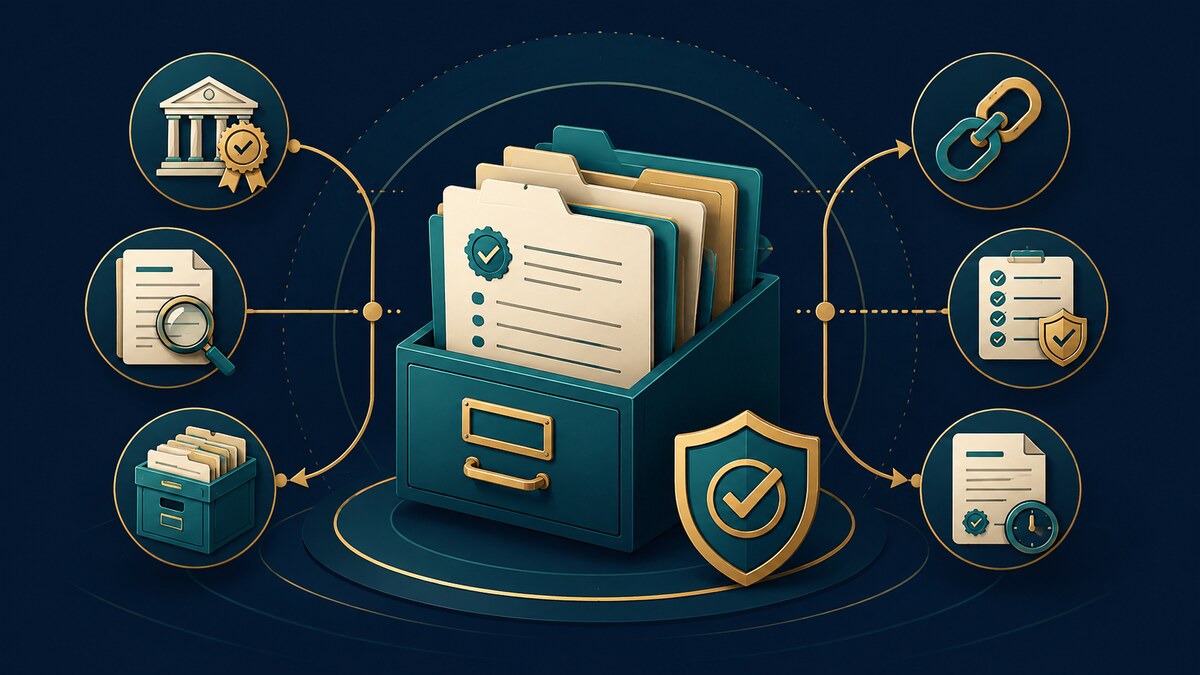
An organization can be well controlled and still fail an audit, because the control operated and nobody kept proof. In assurance work, evidence is not a byproduct of the control. It is half of it.
What actually counts as evidence
Evidence needs four properties, and a screenshot usually has one of them.
It has to be attributable, so it is clear who performed the action. It has to be dated, and dated by the system rather than by the person submitting it. It has to be complete, covering the whole population rather than the convenient part. And it has to be verifiable, meaning a reviewer could go and confirm it independently.
A cropped screenshot with no timestamp and no system context fails three of the four. It is the single most common reason a control that genuinely operated gets written up as a finding.
Collect it as it happens
There are two ways to run an evidence program. In the first, evidence accumulates continuously because the control produces a record when it runs. In the second, someone reconstructs the year three weeks before fieldwork.
The second is where the panic, the overtime and most of the findings come from, and it is nearly universal in immature programs. If you can describe moving a team from the second to the first, you have an interview answer that most candidates do not.
The practical move is to design the evidence at the same time as the control. When you write "system owners review access quarterly", decide then what the review will leave behind and where it will live. If nobody can answer that, the control has no evidence path and will fail regardless of how conscientiously it is performed.
Chain of custody and retention
Evidence should be traceable back to the system that produced it. Exports are stronger than screenshots. Reports generated by the reviewer are weaker than reports generated by the platform. When evidence passes through a person before reaching the file, note that it did.
Retention has to match the longest applicable obligation rather than the shortest convenient one. SOX documentation is commonly retained for seven years. Framework certification cycles have their own periods. Deleting evidence early because storage was tidied is a genuinely painful way to fail a subsequent audit.
Writing it down so it holds up
Evidence documentation is writing, and it is judged the way an auditor reads: what is this, where did it come from, what period does it cover, what does it demonstrate, and what does it not.
That last part matters more than it sounds. Documentation that quietly overstates what a piece of evidence proves is worse than documentation admitting a limit, because the overstatement will be discovered by someone else, at the worst moment, and it will change how everything else you produced is read.
Automation helps, and moves the problem
Vanta, Drata, Hyperproof and the compliance modules in ServiceNow and Archer collect evidence on a schedule and timestamp it properly. That solves the reconstruction problem and creates a new one, which is that automated collection is only as good as its configuration. An integration quietly pointed at the wrong scope produces a beautifully timestamped year of evidence for the wrong population.
Checking what the automation is actually looking at is now part of the job.
Where to go next
- Browse the jobs that use these skills
- Follow a career roadmap into the role you want
- Hiring for this? Start from a job description template
- Free certification study games, 592 practice questions
Frequently Asked Questions
What are evidence and documentation skills in GRC?
The ability to determine what proof a control should produce, collect it in a form a reviewer will accept, store it with traceability back to its source system, and describe accurately what it does and does not demonstrate.
What makes evidence acceptable to an auditor?
Four properties. It is attributable to a person, dated by the system rather than by the submitter, complete across the whole population, and independently verifiable. A cropped screenshot with no timestamp fails most of these.
Why do screenshots cause audit findings?
Because they are usually undated, uncropped only where convenient, and impossible to trace back to a source system. A control can operate perfectly and still be written up because the evidence cannot be verified.
What is continuous evidence collection?
Designing controls so that performing them produces a dated record automatically, rather than reconstructing a year of evidence shortly before fieldwork. It is the single largest difference between mature and immature compliance programs.
How long should evidence be retained?
For the longest applicable obligation rather than the shortest convenient one. SOX documentation is commonly retained for seven years, and framework certification cycles carry their own periods. Deleting evidence early during a storage cleanup is a common and painful way to fail a later audit.
What is chain of custody for compliance evidence?
A record of where evidence came from and what happened to it. System exports are stronger than screenshots, platform-generated reports are stronger than reports assembled by the reviewer, and any point where evidence passed through a person should be noted.
Which tools automate evidence collection?
Vanta, Drata and Hyperproof are common in smaller and mid-sized companies, and ServiceNow and Archer carry compliance modules for larger ones. They solve the reconstruction problem and introduce a configuration problem, since an integration pointed at the wrong scope produces well-timestamped evidence for the wrong population.
How should evidence be described in documentation?
State what it is, where it came from, what period it covers, what it demonstrates, and what it does not. Overstating what a piece of evidence proves is worse than admitting a limitation, because it will be discovered by someone else and will change how the rest of your work is read.
What jobs need evidence and documentation skills?
Compliance analyst, GRC analyst, internal and IT auditor, SOX analyst, security compliance manager, and any AI governance role producing conformity documentation under ISO/IEC 42001 or the EU AI Act.
More in this series
- 9 Essential Data Governance Skills for the AI Era
- 10 Internal Audit Skills for Modern Assurance Careers
- 12 Transferable GRC Skills You May Already Have
- Technical vs. Nontechnical GRC Skills: What Employers Actually Need
- AI Governance Skills Employers Actually Hire For
- GRC Analyst Skills: What the Job Actually Requires
- Compliance Analyst Skills
- Risk Assessment Skills
- Controls Testing Skills
- Policy Writing Skills
- Regulatory Change Management Skills
- Third-Party Risk Skills
- Model Risk Management Skills
- AI Impact Assessment Skills
- AI Auditing Skills
- AI Evaluation and Testing Skills for Governance Careers
- Data Lineage Skills
- Data Quality Skills
- Privacy Engineering Skills
- AI Security Skills
- AI Incident Response Skills
- Governance Program Management Skills
- Stakeholder Communication Skills
- Executive Risk Reporting Skills
- Control Mapping Skills
- Framework Crosswalking Skills
- Vendor Due Diligence Skills
- Responsible AI Skills
- GRC Tools and Automation Skills
- How to Build the 9 Data Governance Skills: A 12-Month Career Plan
- Founder of ExecSearches and GRC Careers
- Executive search across corporate, higher education, financial services, and nonprofit sectors
- Focus on AI governance and GRC hiring
- More than a decade in risk advisory and internal audit in financial services
- Led SOX and regulatory audits for Citi, Goldman Sachs, Morgan Stanley, and McKesson
- Public Accounting Certification, Cornell University