
Home › Cybersecurity & GRC Career Guides › Stakeholder Communication Skills
Stakeholder Communication Skills
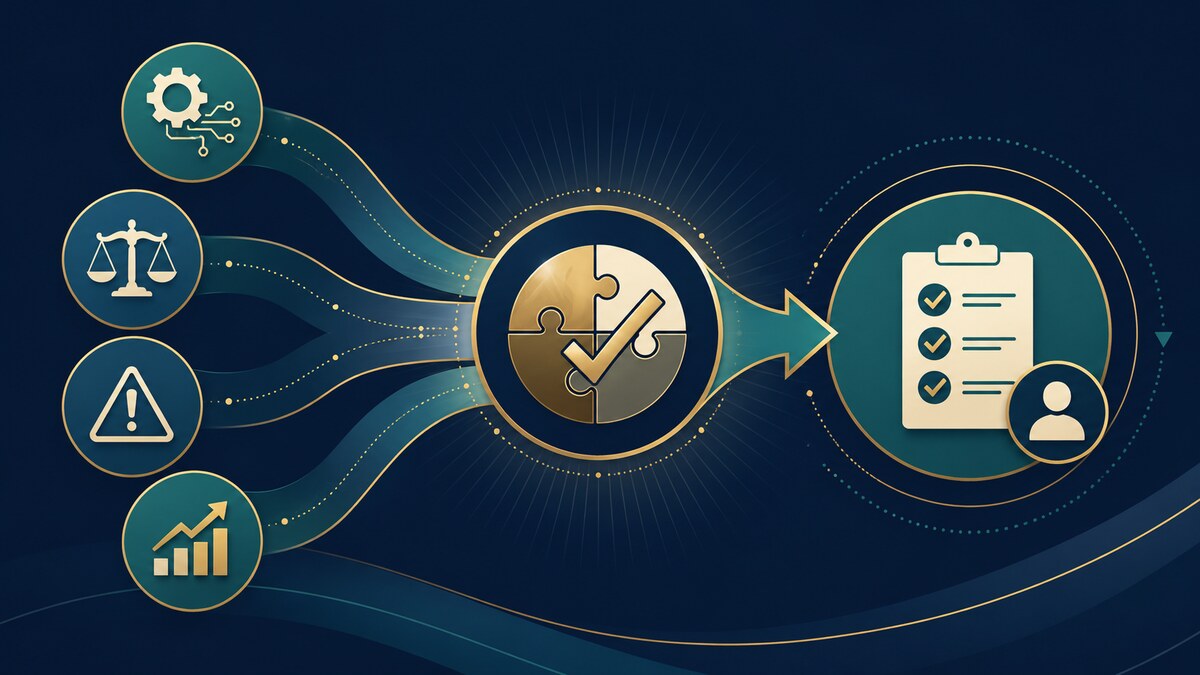
Most of the difficulty in GRC is not analytical. It is that the work depends on people who do not report to you, did not ask for your involvement, and are measured on things your request slows down.
Understand what the room is paid for
An engineer is measured on shipping. A sales lead is measured on closing. A finance director is measured on the forecast. None of them is measured on your control.
Requests framed around your objective land badly for a predictable reason: they are asking someone to spend their time on your metric. Requests framed around theirs land better. The security questionnaire that keeps stalling a deal, the audit finding that will otherwise appear in the report their board reads, the outage that would follow the gap you are describing.
This is not manipulation. It is accuracy. Those consequences are real, and stating them is more honest than implying compliance is its own reward.
Be specific enough to be actionable
"Please send evidence of access reviews" produces silence or the wrong file. "I need the export from the Q2 access review for the payments database, the one showing reviewer and date, by Thursday, for the SOC 2 audit starting on the 14th" produces the file.
Name the artifact. Name the system. Give a date and say what it is for. Vague requests are read as low priority, correctly, because nobody can tell what finishing looks like.
Bad news travels badly
Delivering a finding to the person who owns the failure is the hardest routine conversation in the job. What works is separating the finding from the person, telling them before it is in a report, and arriving with a view on severity rather than a bare fact.
A control owner who first learns of a finding by reading it in a document circulated to their boss will be an obstacle for the next two years, and they will be right to be.
Different rooms, different registers
Engineers want the technical detail and will trust you more, not less, if you admit the limits of what you know. Executives want the conclusion, the consequence and the decision. Legal wants the obligation and the exposure. Auditors want the evidence trail.
Saying the same sentence to all four is a common mistake and reads as not having thought about the audience.
The credibility account
Everything above rests on being trusted, and trust in this role is built in unglamorous ways. Do not escalate as a first move. Do not report a finding you have not verified. Do not ask for evidence you will not look at, which people notice faster than anything else. Close the loop when something gets fixed, because teams that never hear the outcome stop responding.
You spend that credibility when you genuinely need something done. Spending it on a documentation nit leaves nothing for the week you find something real.
Where to go next
- Browse the jobs that use these skills
- Follow a career roadmap into the role you want
- Hiring for this? Start from a job description template
- Free certification study games, 592 practice questions
Frequently Asked Questions
Why does stakeholder communication matter in GRC?
Because the work depends on people who do not report to you and are measured on things your requests slow down. Analytical quality is wasted if the control owner does not act on it.
How do you get busy people to respond to evidence requests?
Be specific enough that finishing is obvious. Name the artifact, the system, the date needed and the reason. "Send evidence of access reviews" produces silence. "The Q2 access review export for the payments database showing reviewer and date, by Thursday, for the SOC 2 audit starting on the 14th" produces the file.
How should you frame a compliance request?
Around the other person's objective rather than yours. The stalled security questionnaire, the finding that will otherwise reach their board, the outage the gap would cause. These consequences are real, and naming them is more honest than implying compliance is its own reward.
How do you deliver a finding without damaging the relationship?
Separate the finding from the person, tell them before it appears in a report, and bring a view on severity rather than a bare fact. A control owner who first reads a finding in a document circulated to their manager becomes a long-term obstacle.
Should you communicate differently with different audiences?
Yes. Engineers want technical detail and trust you more when you admit uncertainty. Executives want the conclusion, consequence and decision. Legal wants obligation and exposure. Auditors want the evidence trail. One message for all four reads as not having considered the audience.
What damages credibility fastest in GRC?
Escalating as a first move, reporting an unverified finding, and asking for evidence you never look at. The last one is noticed quickly and teaches people that your requests can be deprioritized.
Why does closing the loop matter?
Because teams that never hear what happened to the thing they sent you stop responding. Confirming that an issue was closed costs a sentence and preserves the working relationship.
Is stakeholder communication a technical or soft skill?
It is a working skill, and hiring managers weight it roughly as heavily as the technical stack. It is also the most common reason a technically capable analyst stalls at mid level.
How do you build influence without authority?
By treating credibility as a finite account. Verify before reporting, ask only for what you will use, escalate rarely, and close loops. Then spend it on the things that genuinely matter rather than on documentation nits.
More in this series
- 9 Essential Data Governance Skills for the AI Era
- 10 Internal Audit Skills for Modern Assurance Careers
- 12 Transferable GRC Skills You May Already Have
- Technical vs. Nontechnical GRC Skills: What Employers Actually Need
- AI Governance Skills Employers Actually Hire For
- GRC Analyst Skills: What the Job Actually Requires
- Compliance Analyst Skills
- Risk Assessment Skills
- Controls Testing Skills
- Policy Writing Skills
- Regulatory Change Management Skills
- Third-Party Risk Skills
- Model Risk Management Skills
- AI Impact Assessment Skills
- AI Auditing Skills
- AI Evaluation and Testing Skills for Governance Careers
- Data Lineage Skills
- Data Quality Skills
- Privacy Engineering Skills
- AI Security Skills
- AI Incident Response Skills
- Governance Program Management Skills
- Executive Risk Reporting Skills
- Evidence Documentation Skills
- Control Mapping Skills
- Framework Crosswalking Skills
- Vendor Due Diligence Skills
- Responsible AI Skills
- GRC Tools and Automation Skills
- How to Build the 9 Data Governance Skills: A 12-Month Career Plan
- Founder of ExecSearches and GRC Careers
- Executive search across corporate, higher education, financial services, and nonprofit sectors
- Focus on AI governance and GRC hiring
- More than a decade in risk advisory and internal audit in financial services
- Led SOX and regulatory audits for Citi, Goldman Sachs, Morgan Stanley, and McKesson
- Public Accounting Certification, Cornell University