Home › Cybersecurity & GRC Career Guides › AI Auditing Skills
AI Auditing Skills
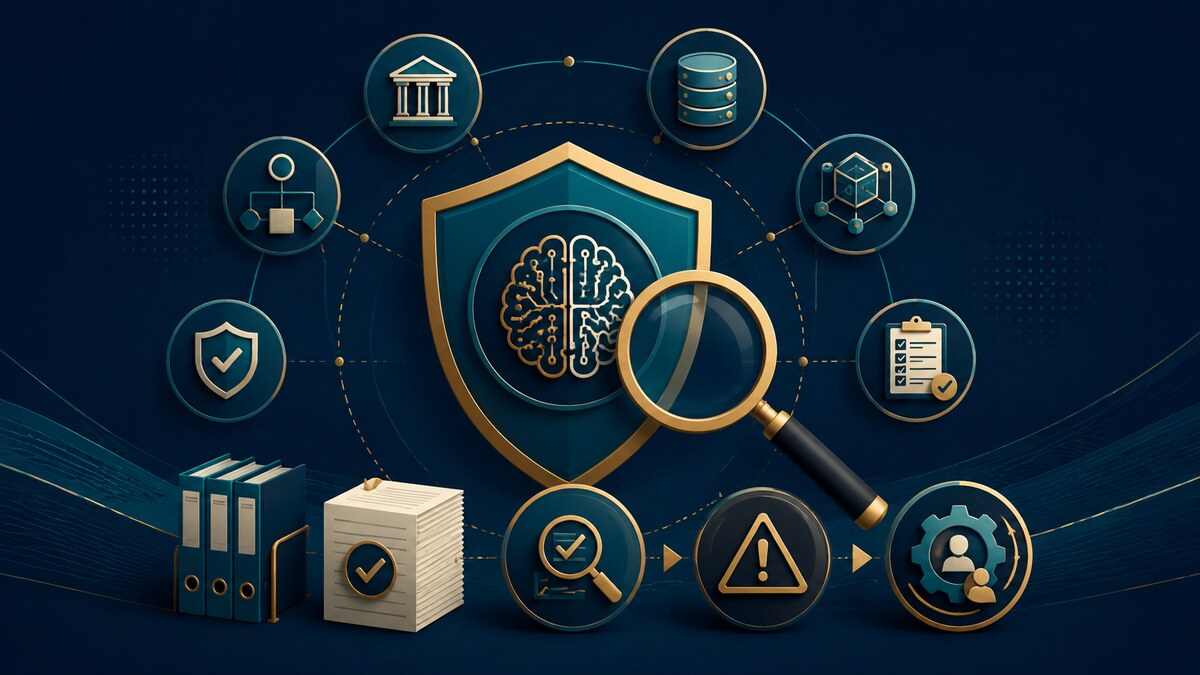
Auditing an AI system means forming an independent opinion about whether it does what its owners say it does. The word carrying the weight is independent. If the team that built the model also decides whether it works, that is quality assurance, and it is not an audit.
Traditional audit skills carry further than people expect
The instinct is that AI audit needs a machine learning background above all else. In practice the audit habits transfer strongly and the technical piece is learnable.
Establishing a complete population still matters, and it is harder here: you must know every model in production, which most organizations cannot tell you. Sampling still matters, though you are now sampling inputs and outputs rather than transactions. Evidence standards are unchanged. And professional skepticism, the refusal to accept a claim because a confident person made it, is exactly the thing that keeps an auditor useful in a room full of people who understand the model better than you do.
What is actually testable
Plenty, and much of it does not require reading the model's internals.
Whether the documented purpose matches the deployed use, which fails more often than anything else, because systems get quietly repurposed. Whether performance holds on data resembling current reality rather than the training set. Whether performance is consistent across subgroups, which requires disaggregated measurement. Whether human oversight is real, which you test by looking at override rates rather than at the policy claiming oversight exists. Whether monitoring would actually catch drift, which you test by asking what alerted most recently and what happened next.
That last one is the most revealing question in the whole discipline. A monitoring system that has never alerted is either watching nothing or has thresholds set where nothing can trip them.
Where independence gets difficult
The people who can explain the model are the people you are auditing. That is uncomfortable and it is manageable, provided you say plainly what you verified yourself and what you accepted on explanation.
An audit report that blurs those two is worse than one admitting a limit, because a reader cannot tell which conclusions are load-bearing.
Standards to work from
ISO/IEC 42001 is auditable and certifiable, which makes it the natural backbone for a management system audit. The NIST AI RMF is not certifiable but gives a well-organized structure for the risk work. ISACA and the IIA have both published AI audit guidance aimed at existing auditors. For high-risk systems in scope of the EU AI Act, conformity assessment is a formal route with its own requirements.
The honest state of the field
AI auditing is young, and job titles are ahead of methodology. Nobody has a settled, agreed procedure the way SOX or ISO 27001 audit has. That is worth saying out loud in an interview, because claiming a maturity the discipline does not yet have reads as inexperience rather than confidence.
What experienced practitioners bring is the ability to design a test for a claim nobody has tested before, and to write up honestly what it did and did not establish. That skill is transferable from any audit background, which is why so many people arriving in AI audit came from internal audit, IT audit or model validation rather than from data science.
Where to go next
- Browse the jobs that use these skills
- Follow a career roadmap into the role you want
- Hiring for this? Start from a job description template
- Free certification study games, 592 practice questions
Frequently Asked Questions
What is AI auditing?
Forming an independent opinion on whether an AI system does what its owners claim. Independence is the defining feature: assessment by the team that built the model is quality assurance rather than audit.
Do I need a machine learning background to audit AI?
It helps but it is not the scarce ingredient. Population completeness, sampling, evidence standards and professional skepticism transfer directly from traditional audit, and most people entering AI audit come from internal audit, IT audit or model validation.
What can actually be tested in an AI audit?
Whether documented purpose matches deployed use, whether performance holds on current data rather than the training set, whether it is consistent across subgroups, whether human oversight is real as shown by override rates, and whether monitoring would catch drift.
What is the most revealing question to ask?
When did monitoring last alert, and what happened next. A monitoring system that has never alerted is either watching nothing or has thresholds set where nothing can trip them.
How do you maintain independence when auditing AI?
By being explicit about what you verified yourself and what you accepted on explanation from the build team. A report that blurs the two is worse than one that states its limits, because the reader cannot tell which conclusions are load-bearing.
Which standards support AI auditing?
ISO/IEC 42001 is auditable and certifiable and works well as a management system backbone. The NIST AI RMF is not certifiable but structures the risk work. ISACA and the IIA have published guidance for existing auditors, and the EU AI Act sets out conformity assessment for high-risk systems.
Is AI auditing a mature discipline?
No, and saying so is more credible than claiming otherwise. Job titles are ahead of methodology, and there is no settled procedure equivalent to SOX or ISO 27001 audit. The valuable skill is designing a defensible test for a claim nobody has tested before.
What is the difference between AI audit and model validation?
Model validation is largely a financial services discipline under model risk management, focused on whether a model is conceptually sound and performs as intended. AI audit is broader, covering governance, documentation, oversight, monitoring and impact alongside performance.
What jobs require AI auditing skills?
AI auditor, IT auditor extending into AI, internal audit manager, model validation, AI assurance and AI governance roles building conformity evidence under ISO/IEC 42001 or the EU AI Act.
More in this series
- 9 Essential Data Governance Skills for the AI Era
- 10 Internal Audit Skills for Modern Assurance Careers
- 12 Transferable GRC Skills You May Already Have
- Technical vs. Nontechnical GRC Skills: What Employers Actually Need
- AI Governance Skills Employers Actually Hire For
- GRC Analyst Skills: What the Job Actually Requires
- Compliance Analyst Skills
- Risk Assessment Skills
- Controls Testing Skills
- Policy Writing Skills
- Regulatory Change Management Skills
- Third-Party Risk Skills
- Model Risk Management Skills
- AI Impact Assessment Skills
- AI Evaluation and Testing Skills for Governance Careers
- Data Lineage Skills
- Data Quality Skills
- Privacy Engineering Skills
- AI Security Skills
- AI Incident Response Skills
- Governance Program Management Skills
- Stakeholder Communication Skills
- Executive Risk Reporting Skills
- Evidence Documentation Skills
- Control Mapping Skills
- Framework Crosswalking Skills
- Vendor Due Diligence Skills
- Responsible AI Skills
- GRC Tools and Automation Skills
- How to Build the 9 Data Governance Skills: A 12-Month Career Plan
- Founder of ExecSearches and GRC Careers
- Executive search across corporate, higher education, financial services, and nonprofit sectors
- Focus on AI governance and GRC hiring
- More than a decade in risk advisory and internal audit in financial services
- Led SOX and regulatory audits for Citi, Goldman Sachs, Morgan Stanley, and McKesson
- Public Accounting Certification, Cornell University